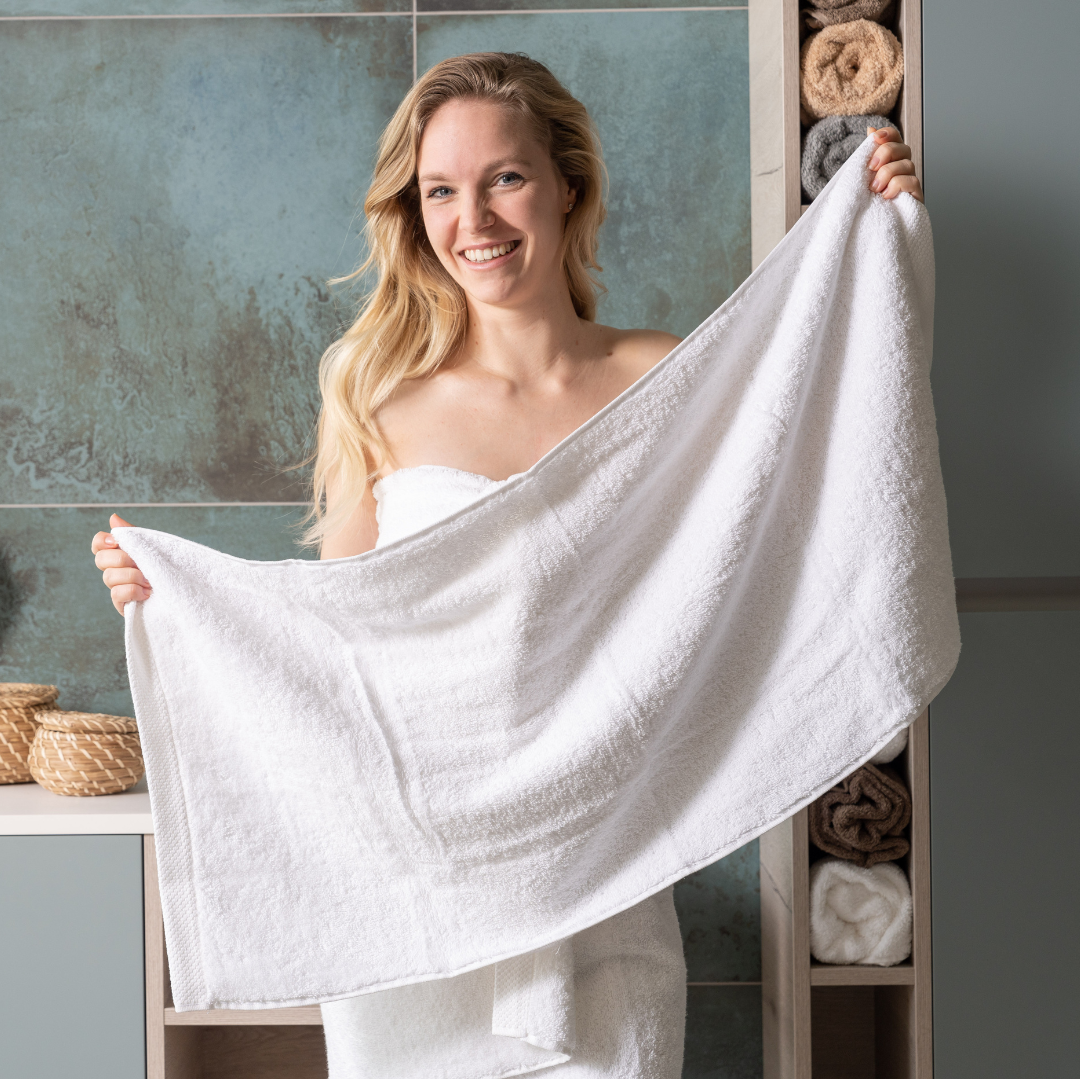
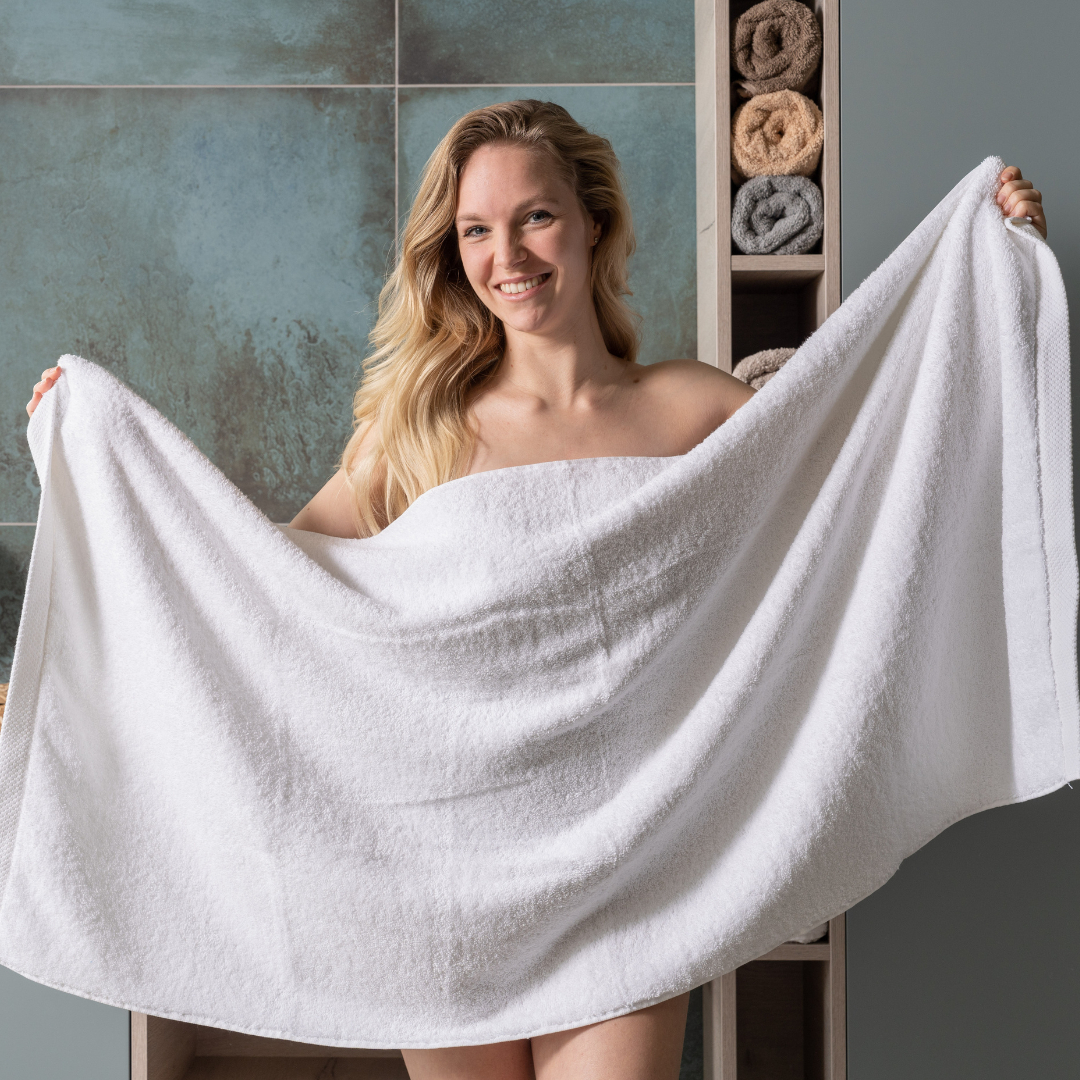
You've just stepped out of the shower, reached for your wonderfully soft towel and started drying yourself. But instead of feeling fresh and comfortable, you find tiny bits of lint all over your arms and face. Sound familiar? Or perhaps your tumble dryer's lint filter is completely full after every drying cycle.
This is especially common with new cotton towels. But why do towels shed lint in the first place? Is it normal? Does it mean your towels are poor quality? And, most importantly, how can you stop it?
The good news is that a little lint shedding is normal with new towels, and it often decreases after the first few washes. However, if your towels continue to shed large amounts of lint over time, there may be something else going on.
At Miss Towels, we know how frustrating this can be. That's why we're explaining where those little fibres come from, how to identify the cause and what you can do to reduce the problem.
Why do towels shed lint?
To understand why towels shed lint, it helps to know a little about how cotton towels are made.
A cotton yarn isn't made from one long, continuous fibre. Instead, it's spun from thousands of individual cotton fibres. During spinning, these fibres are brought together and twisted to create a strong yarn.
These yarns are then woven into terry cloth. The thousands of tiny loops give towels their soft, fluffy texture and help them absorb moisture.
However, not every cotton fibre is held equally firmly within the yarn.
Some fibre ends stick out from the surface, while others may become loose during manufacturing. When you use, wash or dry a towel, friction occurs. This can cause some of those fibres to break away.
You'll then notice them as tiny bits of lint on your skin, in your washing machine or in your tumble dryer's lint filter.
So, a towel that sheds lint isn't automatically a poor-quality towel.
What matters most is how many fibres come loose, how long the shedding continues and how well the towel maintains its original structure.
Why do new towels shed more lint?
Have you just bought new towels and noticed lots of lint after the first wash? Don't assume you've made a bad purchase just yet.
During manufacturing, loose cotton fibres can remain trapped between the loops of the terry fabric. These fibres are gradually removed during the first few washing and drying cycles.
That's why your tumble dryer's lint filter may fill up surprisingly quickly when drying new towels.
With normal initial shedding, you should generally see the amount of lint gradually decrease after repeated washing. The number of washes needed varies from towel to towel.
But if your towels continue to shed just as much lint, or even more, after many washes, it's worth investigating further.
5 reasons why your towels keep shedding lint
1. The quality and length of the cotton fibres
Not all cotton fibres are the same length.
Longer cotton fibres are generally beneficial when spinning yarn because they make it easier to produce a more even and stronger yarn.
Shorter fibres can more easily protrude from the surface of the yarn, making them more likely to come loose during washing and everyday use.
That's why it's worth looking beyond the words '100% cotton' when buying towels.
The properties of the cotton fibres and the way they're processed also make a difference.
2. The yarn isn't strong enough
Another possible cause lies in how the cotton yarn is spun.
During spinning, cotton fibres are twisted together. This twisting action, known as yarn twist, helps hold the fibres in place.
If the fibres aren't securely held within the yarn, they can come loose more easily.
However, more twist isn't automatically better. A tightly spun yarn can feel different from a more open, airy yarn. Manufacturers therefore need to find the right balance between softness, strength and absorbency.
3. Excessive friction during washing
The way you wash your towels can also influence how much lint they shed.
During a wash cycle, towels constantly move against each other and the inside of the washing machine drum. This movement is necessary for cleaning, but it also creates friction.
Washing towels alongside clothing with sharp zips, hooks or other hard components can also damage the terry loops.
For this reason, it's best to wash towels with similar textiles whenever possible.
4. Damaged loops in the terry fabric
Are you noticing long threads sticking out of your towel rather than just small pieces of lint?
Then something else may be happening.
A terry towel is made up of thousands of tiny loops. If one of these loops catches on a zip, hook or another object, it can be pulled out of place.
This isn't the same as normal lint shedding.
Never pull on a loose loop. Instead, carefully trim the protruding loop with scissors, taking care not to cut into the underlying fabric.
5. A manufacturing issue
Sometimes, the problem has nothing to do with how you use or wash your towels.
Making a towel involves numerous manufacturing stages, from selecting and spinning the cotton to weaving, dyeing, washing and finishing the fabric.
If something goes wrong during one of these stages, it can affect the quality of the finished towel.
Possible causes include an inconsistent batch of yarn, loose fibres that weren't adequately removed during finishing or damage caused during production.
If several towels from the same purchase shed unusually large amounts of lint while other towels washed under similar conditions don't, a manufacturing issue could be responsible.
How to stop towels shedding lint: 6 practical tips
Fortunately, there are several things you can try to reduce lint shedding.
Tip 1: Wash new towels before using them
It's best to wash new towels before their first use, following the instructions on the care label.
This helps remove some loose fibres and any remaining manufacturing residues before you start using the towel.
During the first few washes, it's also a good idea to keep new towels that shed heavily separate from clothes that easily attract lint.
Tip 2: Avoid washing towels with rough clothing
Jeans, clothing with zips and other rough materials can cause extra friction or damage.
Whenever possible, wash your towels with other towels or similarly durable textiles.
Tip 3: Load your washing machine correctly
Overloading your washing machine isn't a good idea. Laundry needs enough room to move freely, get properly cleaned and rinse thoroughly.
However, washing just one or two items in a nearly empty drum isn't always ideal either.
Follow your washing machine manufacturer's recommended load for the selected programme. You don't need to pack the drum completely full to prevent lint shedding.
Tip 4: Use the right amount of detergent
More detergent doesn't necessarily mean cleaner towels.
Use the recommended amount based on your water hardness, laundry load and how dirty the towels are.
Too much detergent can be difficult to rinse away completely, leaving residues behind. While this doesn't necessarily cause lint shedding directly, it can affect how your towels feel and perform.
Tip 5: Avoid fabric softener where possible
Fabric softener can make towels feel softer, but it may also affect their ability to absorb moisture.
That's why we recommend avoiding fabric softener when washing cotton towels.
After all, a good towel shouldn't just feel soft. It should also dry your skin comfortably and effectively.
Tip 6: Dry your towels carefully
If the care label allows tumble drying, choose an appropriate programme and avoid unnecessarily high temperatures.
Clean the lint filter according to your tumble dryer's instructions.
Tumble drying can help fluff up the loops of terry fabric, making towels feel softer. However, the mechanical movement can also release loose fibres.
Don't have a tumble dryer? Hang your towels up with enough space to dry properly, and give them a gentle shake before and after drying.
When is towel lint shedding no longer normal?
This might be the most important question of all.
A little lint shedding from new cotton towels isn't unusual. However, you shouldn't have to accept a towel that continues to lose large amounts of fibres after every wash.
Look out for these warning signs:
- Your skin is covered in tiny cotton fibres after drying yourself.
- The amount of lint barely decreases after repeated washing.
- Your towel appears to be getting noticeably thinner.
- Bare patches or an unusually large number of damaged loops develop.
- Several towels from the same purchase show the same problem.
If you notice several of these signs, first check whether you're following the care instructions correctly.
Did you buy your towels from Miss Towels? Feel free to contact us. We'll be happy to look into the issue with you, help identify what might be causing it and work together to find a suitable solution.
If you bought your towels from another brand, we recommend contacting the retailer where you purchased them. Persistent, excessive lint shedding can sometimes indicate a problem with the material or manufacturing process.
A towel that continually loses large amounts of fibres won't automatically become a good towel simply because you keep washing it.
Does combed cotton help prevent lint shedding?
When shopping for new towels, you may come across the term combed cotton.
But what does it actually mean?
During the production of combed cotton yarn, the cotton fibres go through an additional processing stage. This removes some of the shorter fibres and helps align the remaining fibres more evenly.
The result can be a more uniform yarn with fewer short fibre ends sticking out.
This is particularly interesting for towels because protruding and poorly secured cotton fibres can contribute to lint shedding.
Combed cotton is therefore a valuable quality feature.
However, it doesn't guarantee that a towel will never shed lint. The yarn construction, weaving process and finishing also play important roles.
What should you look for when buying new towels?
Want to avoid buying another set of towels that leaves you disappointed? Don't judge them solely by how soft they feel when they're brand new.
Pay attention to the following factors:
- The material. Cotton naturally absorbs moisture well, but the quality and processing of the fibres also matter.
- The yarn. Combed cotton can contribute to a more uniform yarn structure with fewer protruding short fibres.
- The weight. Grams per square metre (GSM) tells you how much a towel weighs relative to its surface area. A higher GSM doesn't automatically mean less lint shedding, but it does influence how substantial and heavy the towel feels.
- The construction. Look at the hems, edges and terry loops. Neat, sturdy construction is important for long-term use.
- Other customers' experiences. Don't just read reviews about how soft towels feel when they arrive. Look for feedback from people who have used and washed them several times.
These details can help you make a more informed purchase.
Why do we choose combed cotton at Miss Towels?
At Miss Towels, we believe a towel should feel wonderful long after its first use.
That's why our towels are made from 100% cotton with long fibres that are processed into combed yarn. They have a weight of 550 GSM and double-stitched side seams.
We've chosen this combination to create a full, comfortable feel, enjoyable everyday practicality and a carefully finished product.
Using long, combed cotton fibres is a deliberate material choice. It can contribute to a more uniform yarn structure, which is relevant when aiming to minimise excessive fibre loss.
Of course, even a high-quality cotton towel may shed a little lint at first. That's why we believe in being open about what to expect and sharing practical care advice.
Because after a shower, the last thing you want to worry about is lint sticking to your skin.
You want to wrap yourself in a lovely towel, enjoy that soft, comfortable feeling and experience a little of the luxury you'd expect from a beautiful hotel.
Only this time, in your very own bathroom.
Conclusion: a little lint is normal, but persistent shedding deserves attention
New cotton towels may release loose fibres during their first few washes. This isn't automatically a sign of poor quality.
Proper care can help reduce unnecessary friction and damage.
However, if your towels continue to shed excessive amounts of lint over time, the cause may lie in the material, yarn construction or manufacturing process.
At Miss Towels, we're always happy to help if you have questions about our towels. We believe a great towel should make your daily shower feel better, not more complicated.
Looking for new towels? Think beyond the price or how soft they feel straight out of the packaging.
Discover our towels and bring the luxury hotel experience into your own home.
Frequently asked questions about towel lint
How many washes does it take for towels to stop shedding lint?
It varies from towel to towel. Initial fibre shedding often decreases after a few washes, but there's no fixed number of washing cycles that applies to every towel.
Are towels that shed lint poor quality?
Not necessarily. New cotton towels may release some loose fibres at first. However, persistent, excessive shedding can indicate a problem with the material, construction or finishing.
Should I wash towels at 40°C or 60°C to reduce lint?
Always follow the towel's care label. The appropriate temperature depends on factors such as colour, finishing and care instructions. Washing at a higher temperature isn't a guaranteed solution for lint shedding.
Does vinegar stop towels from shedding lint?
There's insufficient evidence that vinegar is a reliable solution for excessive lint shedding. We therefore don't recommend using it as a standard lint treatment. Some washing machine manufacturers also advise against regularly using vinegar in their machines.
Do 550 GSM towels shed less lint than 800 GSM towels?
Not automatically. GSM describes a towel's weight per square metre, but it doesn't directly tell you anything about fibre length, yarn twist or lint shedding. A heavier towel may feel more luxurious and substantial, but it isn't necessarily less likely to shed lint.